
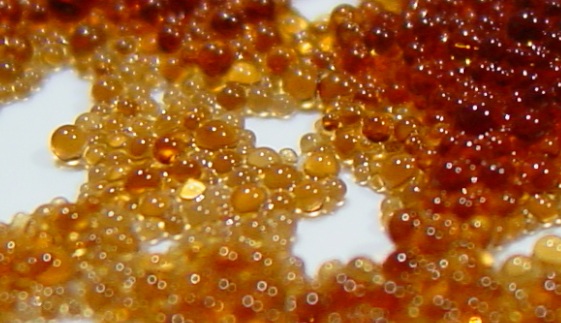
In the world of water treatment and various industrial processes, ion exchange resins have emerged as versatile and indispensable materials. These resin beads, with their remarkable ability to selectively capture and exchange ions, play a pivotal role in purifying water, extracting valuable metals, and facilitating numerous chemical processes. This article explores the fascinating world of ion exchange resins, shedding light on their principles, applications, and the transformative impact they have on diverse industries.
Understanding Ion Exchange Resins:
Ion exchange resins are synthetic or naturally occurring polymers with a porous structure capable of exchanging ions with surrounding solutions. The process of ion exchange involves the replacement of undesired ions in a solution with ions of similar charge from the resin. The resins contain functional groups that attract and selectively capture specific ions, facilitating the purification or separation of substances in a variety of applications.
Types of Ion Exchange Resins:
- Cation Exchange Resins: These resins exchange positively charged ions (cations). Common functional groups include sulfonic acid, carboxylic acid, and phosphonic acid, providing a variety of options for specific applications.
- Anion Exchange Resins: Anion exchange resins exchange negatively charged ions (anions). Common functional groups include quaternary ammonium, tertiary amine, and primary amine.
- Chelating Resins: Chelating resins are designed to capture and remove specific metal ions through a process known as chelation, forming stable complexes with the targeted metals.
Applications of Ion Exchange Resins:
- Water Softening: Cation exchange resins are widely used in water softening plants to remove calcium and magnesium ions, preventing the formation of scale in pipes and appliances.
- Deionization: Mixed-bed ion exchange resins, containing both cation and anion exchange resins, are utilized in deionization processes to produce high-purity water by removing all ions from a solution.
- Metal Recovery: Chelating resins find application in metal recovery processes, such as extracting valuable metals from mining solutions and recycling processes.
- Wastewater Treatment: Ion exchange resins are employed in treating industrial wastewater to remove heavy metals and other pollutants, ensuring compliance with environmental regulations.
- Chemical and Pharmaceutical Industries: Ion exchange resins are integral in the purification and separation of chemicals and pharmaceuticals, aiding in the production of high-quality products.
Operating Principles:
- Adsorption: Ions from the solution are attracted to the functional groups on the resin beads and adhere to their surfaces.
- Exchange: The ions on the resin beads are exchanged with ions of similar charge from the solution, leading to a shift in the composition of the solution.
- Regeneration: When the resin becomes saturated with unwanted ions, it undergoes a regeneration process, where a concentrated solution of ions is passed through to replace the captured ions, restoring the resin’s capacity.
Advantages and Considerations:
- Selective Ion Removal: Ion exchange resins offer selective removal of specific ions, providing a tailored solution for various applications.
- High Efficiency: The regeneration process allows for the reuse of ion exchange resins, making them a cost-effective and sustainable option.
- Limitations: Challenges include the finite capacity of resins, the need for periodic regeneration, and the disposal of regenerant solutions, which may contain concentrated ions.
Conclusion:
Ion exchange resins stand as unsung heroes in the realm of water treatment and industrial processes, facilitating the purification of water and the extraction of valuable substances. As technology advances and environmental considerations become more prominent, ion exchange resins are likely to play an even more significant role in shaping a sustainable and resource-efficient future across diverse industries.