
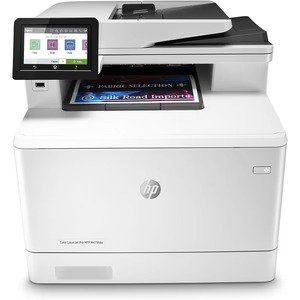
The Evolution of Printers From Past to Present
The journey of printers, from their humble beginnings to the cutting-edge technology of today, is a testament to human innovation and ingenuity. This article delves into the evolution of printers, exploring their fascinating history and the advancements that have revolutionized the way we put ink to paper.
1. The Gutenberg Press: A Revolutionary Invention
The story of printers begins with Johannes Gutenberg, a visionary inventor who introduced movable-type printing to Europe in the 15th century. This groundbreaking technology allowed for the mass production of books and played a pivotal role in the spread of knowledge during the Renaissance period.
Johannes Gutenberg’s invention revolutionized the way information was disseminated. Prior to the printing press, books were painstakingly copied by hand, a laborious process that limited access to knowledge. With movable-type printing, Gutenberg made it possible to produce books on a much larger scale, democratizing learning and sparking a cultural renaissance.
The availability of printed materials not only accelerated the spread of ideas but also paved the way for advancements in various fields, from science and philosophy to art and literature. Gutenberg’s legacy endures as one of the most significant milestones in human history, shaping
the course of civilization for generations to come.
2. From Letterpress to Offset Printing
As centuries passed, printing technology continued to evolve. The letterpress, a mechanical printing method that involved arranging movable type, dominated the industry for centuries.
However, in the 19th century, offset printing emerged as a game-changer. This technique, which involves transferring ink from a plate to a rubber blanket before printing, revolutionized the speed and quality of mass production.
The emergence of offset printing marked a turning point in the history of printing technology. It introduced a level of precision and efficiency that was previously unimaginable.
By transferring ink onto a rubber blanket before imprinting it on paper, offset printing eliminated the need for direct contact between the printing plate and the paper. This not only reduced wear and tear on the equipment but also allowed for consistently sharp and clear prints.
The ability to produce high-quality images at a faster pace opened up new avenues for industries, from publishing and advertising to packaging and beyond.
Offset printing became the gold standard for mass production, influencing the design and distribution of printed materials worldwide. Its legacy endures in modern commercial printing, demonstrating the enduring impact of this 19th-century innovation.
3. The Advent of Digital Printing
The late 20th century witnessed a seismic shift in printing technology with the advent of digital printing. This innovation replaced traditional mechanical processes with computer-generated imagery, enabling high-quality prints with unmatched precision. Today, digital printers are ubiquitous, found in homes, offices, and commercial printing facilities worldwide.
The digital revolution in printing brought about unprecedented flexibility and accessibility. With the integration of computer-generated imagery, digital printers could reproduce images and text with astonishing clarity and detail.
This marked the beginning of a new era, where customization and personalization became paramount. Businesses could now tailor their marketing materials to specific audiences, and individuals could create personalized prints from the comfort of their homes.
Moreover, the environmental impact of printing was significantly reduced, as digital printing eliminated the need for traditional chemical processes and excessive paper waste. As technology continues to advance, the capabilities of digital printing are poised to expand even further, promising a future where creativity knows no bounds.
4. Laser Printers: Precision and Speed Combined
Laser printing, a cornerstone of modern office environments, emerged in the 1970s. This technology utilizes laser beams to transfer toner onto paper, resulting in swift, high-resolution prints. Laser printers have become the go-to choice for businesses seeking efficiency and professional-grade output.
The precision and speed offered by laser printing revolutionized the way businesses handle their printing needs. The focused laser beams allow for intricate detailing and razor-sharp text, making laser printers indispensable in producing documents of the highest quality.
Beyond just efficiency, these printers have also proven to be cost-effective in the long run, with their ability to handle high-volume printing without compromising on quality.
This has solidified their position not only as a cornerstone of modern offices but as an essential tool in various industries, where the demand for crisp, professional-grade output continues to rise.
5. Inkjet Printers: Vibrant Colors, Versatile Printing
Inkjet printing, known for its exceptional color reproduction, gained popularity in the late 20th century. This technology propels droplets of ink onto paper, creating vibrant and detailed prints. Inkjet printers have found their niche in photography, graphic design, and small businesses.
6. 3D Printing: Shaping the Future
The 21st century ushered in a new era of printing technology with the advent of 3D printing. Also known as additive manufacturing, this process constructs objects layer by layer, opening up endless possibilities in fields such as aerospace, healthcare, and architecture.
The demand for 3D printers in Qatar has seen a steady rise, with various industries leveraging this cutting-edge technology.
Meeting the Growing Demand
Qatar, a nation known for its rapid technological advancement, has seen a surge in the demand for printers for sale in Qatar. With a flourishing economy and a burgeoning entrepreneurial landscape, the need for reliable and efficient printing solutions is paramount.
Today, a myriad of options for printers cater to diverse consumer needs, from compact home printers to high-capacity commercial machines.
Navigating the Options
For those seeking printers for sale, it’s essential to consider factors like printing volume, color accuracy, and connectivity options. Leading retailers and online marketplaces offer a wide array of printers to choose from, ensuring that individuals and businesses can find the perfect fit for their requirements.
Embracing the Future: Trends in Printing Technology
Looking ahead, the future of printing technology promises even more astonishing advancements. From nanotechnology-driven inks to eco-friendly printing solutions, the industry is on the cusp of a new era. Keeping pace with these trends will be crucial for businesses and individuals alike.
Conclusion: A Legacy of Innovation
The evolution of printers is a testament to human creativity and our unrelenting pursuit of excellence. From Gutenberg’s press to the marvel of 3D printing, each era has brought forth innovations that have transformed the way we share information and express ideas. As we stand on the precipice of a new age in printing, one thing remains certain: the journey of printers is a legacy of innovation that continues to shape our world.