
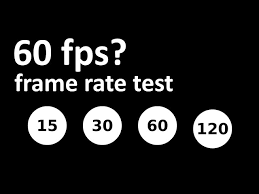
Frame rate, also known as frame frequency, is the number of images, or frames, displayed per second. It is measured in hertz (Hz), and is commonly used to describe the frame rate of video games and movies.
The human eye is a complex organ, and the exact number of frames per second that it can see is a matter of some debate. Some experts believe that the human eye can see up to 60 frames per second, while others believe that it can see even more.
There are a number of factors that can affect the human eye’s ability to perceive frame rate, including:
Brightness: The human eye is more sensitive to changes in brightness than changes in color. This is why you can see a flickering lightbulb at a lower frame rate than you can see a moving object.
Contrast: The human eye is also more sensitive to high-contrast images than low-contrast images. This is why you can see a black and white video at a lower frame rate than a color video.
Peripheral vision: The human eye’s peripheral vision is less sensitive to frame rate than its central vision. This is why you can see a moving object in your peripheral vision at a lower frame rate than you can see it in your central vision.
Frame rate test
You can perform your own frame rate test in several ways. One simple way is to use a website like Subgadgets. This website displays a moving object at a variety of different frame rates. You can adjust the frame rate until you can see the object as a smooth, continuous motion.
Another way to test your frame rate perception is to play a video game. Most video games have a frame rate counter that you can enable. This will show you the current frame rate of the game. You can then adjust the game’s settings to see how different frame rates affect your gaming experience.
Can the human eye see more than 60 FPS?
There is some evidence to suggest that the human eye can see more than 60 frames per second. For example, one study found that people could detect flicker rates of up to 200 Hz under certain conditions.
However, it is important to note that the human eye’s ability to perceive frame rate is not simply a matter of how many frames per second it can see. The human brain also plays a role in interpreting visual information.
The human brain has a tendency to fill in the gaps between frames. This is why you can still perceive a smooth motion even if you are watching a video at a low frame rate.
However, the human brain can only fill in the gaps for a certain amount of time. If the frame rate is too low, the brain will not be able to keep up and you will start to see flickering.
Do I need a high frame rate monitor?
If you are a casual gamer or user, you may not notice a big difference between a 60 Hz monitor and a 120 Hz or 240 Hz monitor. However, if you are a competitive gamer or a creative professional, you may benefit from a high frame rate monitor.
A high frame rate monitor can give you a competitive advantage in video games by making it easier to track moving targets and react to changes in your environment. A high frame rate monitor can also be beneficial for creative professionals who need to do video editing or other graphics-intensive tasks.
Conclusion
The exact number of frames per second that the human eye can see is a matter of some debate. However, it is clear that the human eye can perceive high frame rates and that a high frame rate can provide benefits for certain users.
If you are unsure whether or not you need a high frame rate monitor, the best thing to do is to try one out and see if you can notice a difference.